Warewashing is the cheapest BOH line item until your machine dies mid-Friday-service — then it's the most expensive thing in the building. Most NYC operators under-spec by one tier on day one because they buy off the dealer's catalog without modeling true peak rack volume, NYC water hardness (3-7 grains), or the hidden cost of a Type II hood permit in a pre-war building. Article 81 gives you exactly two regulatory paths — a 180°F high-temp final rinse or chemical sanitizer at 50-100 ppm chlorine / 200 ppm quat — and the machine you spec on day one locks in your boiler load, your chemical contract, and your DOH inspection posture for the life of the lease.
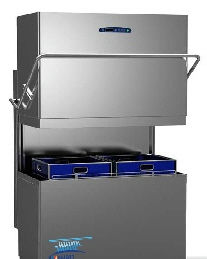
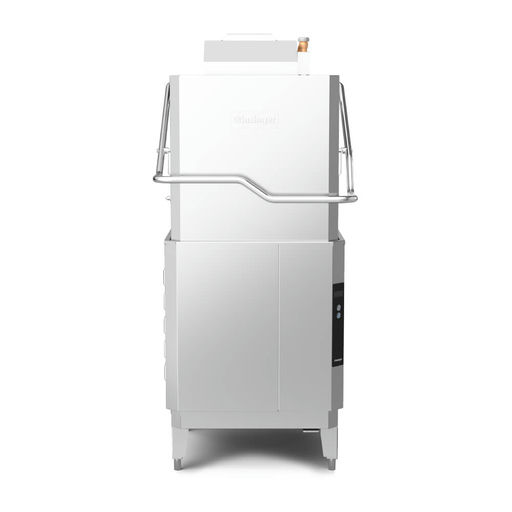
Four machine types matter for NYC hospitality: undercounter (24-30 racks/hr, slides under a 34" bar), door-type (up to 60 racks/hr, the full-service workhorse), conveyor (200-266 racks/hr, hotel banquet), and flight-type (12,000+ pieces/hr, Javits-class). Glasswashers are a fifth category — not a small dishwasher but a different machine entirely, with lower temperatures, gentler spray, and rack geometries built for coupes and Nick & Noras. NYC's cocktail boom means a dedicated glasswasher is a competitive necessity for any bar charging $18+ a drink, not a luxury. Picking the wrong type is more expensive than picking the wrong brand: a CMA undercounter behind a 200-cover restaurant burns out in 18 months, and a Hobart FT900 in a 50-seat wine bar is a $100K+ joke.
Brand-wise, NYC runs on a tight short list: Hobart owns the premium full-service tier (AM Select door-type is the single most-specified machine in the city); Jackson (Hoshizaki-owned) is the mid-market value play 30-40% below Hobart with the same NYC service depth; Champion sits between them on the Ali Group balance sheet; CMA Dishmachines is the budget call for delis, pizza shops, and pop-ups; and Meiko + Winterhalter are the German premium imports for sustainability-conscious or IoT-forward operators. Insinger competes with Hobart only at the flight-type mega-venue ceiling. The single most important variable is not the spec sheet — it's the NYC service network. Hobart and Jackson both have same-day NYC tech response; Winterhalter and Meiko do not, and that gap shows up the first Saturday a board fries.
NYC-specific traps: ventless (DERA) configurations cost thousands more up front but save you from a mechanical engineer + DOB permit + Type II hood retrofit in a basement or pre-war kitchen — frequently the cheaper total path. Skip water treatment and your booster heater's heating element scales out in 24 months ($300-600 in 3M ScaleGard cartridges/yr buys you 8-10 years of element life). And the Auto-Chlor bundled lease model — equipment + chemicals + service + 24/7 emergency for one monthly fee, zero capital outlay — is genuinely the right answer for first-time NYC operators preserving capital, even though you give up ownership and lock into their chemistry. Local Law 97 building emissions caps are pushing ENERGY STAR machines from "nice to have" to "required" in any large commercial building.